 Lingard
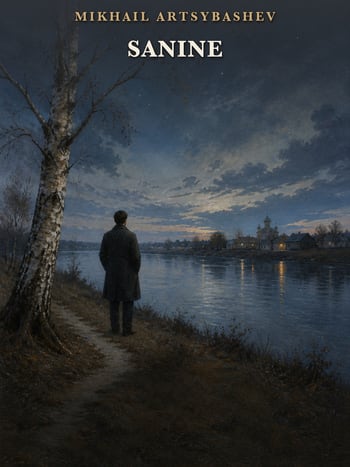
Sanine
Mikhail Artsybashev
Sanine — Vladimir Sanine has arrived back to the family home where his mother and younger sister live, after several years away. While deciding what to do with his life, he meets up with a circle of friends and acquaintances, old and new, and spends his time as many carefree young adults do: in a whirl of parties, politics, picnics, and philosophical talk. But the freedoms of early twentieth century Russia are still held back by inherited social conventions, and their carefree attitudes erode when put in conflict with society’s expectations. In Sanine, Artsybashev describes a group of young adults in a time of great uncertainty, with ongoing religious and political upheaval a daily occurrence. A big focus of the critical response when it was published was on the portrayal of sexuality of the youths, something genuinely new and shocking for most readers. Artsybashev considered his writing to be influenced by the Russian greats (Chekhov, Dostoevsky, and Tolstoy) but also by the individualist anarchism of the philosopher Max Stirner. Sanine was originally written in 1903, but publication was delayed until 1907 due to problems with censorship. Publication did not end the difficulties: from 1908 the novel faced censorship proceedings over allegations of pornography. This edition is based on the 1915 edition of Percy Pinkerton’s English translation.
Get startedNot sure about your level? English level test
 The Secret Garden
 The Adventures of Sherlock Holmes
 Little Women
 Alice’s Adventures in Wonderland
 The Great Gatsby
 When God Laughs
 The Adventures of Tom Sawyer
 Black Beauty
 Lost Face
 The Adventures of Huckleberry Finn
 Sons and Lovers
 White Fang