 Lingard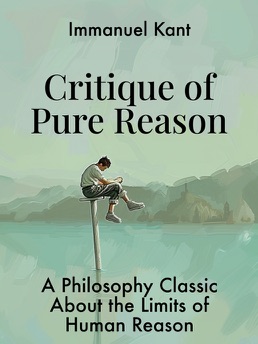
Critique of Pure Reason
Immanuel Kant
Immanuel Kant's philosophical investigation offers a groundbreaking look at human cognition, arguing that while reason is powerful in structuring experiences and guiding ethics, it has inherent limitations, particularly in metaphysics. Distinguishing between knowledge derived from experience and that which is known a priori, Kant reveals the boundaries of reason in grasping metaphysical truths, such as the essence of reality or the existence of God, without empirical evidence. His work asserts that reason's reach is limited to organizing sensory data and ethical behavior, emphasizing the importance of empirical evidence in scientific inquiry and the formulation of moral laws. Kant's critique has profoundly influenced modern philosophy, underscoring the balance between rational deduction and empirical observation in our quest for knowledge and moral clarity.
Get startedNot sure about your level? English level test
 12 Rules For Life
 The Practice of Not Thinking
 Leading an Inspired Life
 Either/Or
 Making Sense
 Lives of the Stoics
 Four Thousand Weeks
 A Handbook for New Stoics
 Becoming Beauvoir
 Beyond Good and Evil
 Oedipus Rex
 Atomic Habits