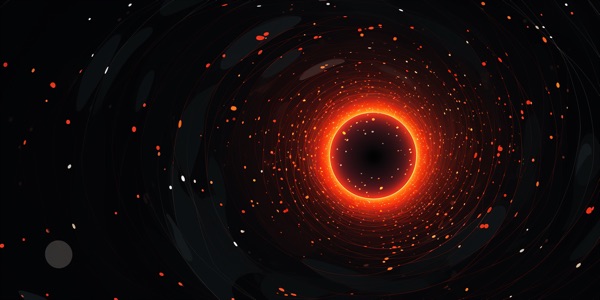
Black holes are fascinating and enigmatic objects in space that have captivated the curiosity of scientists and space enthusiasts alike. In this article, we will explore the basics of black holes and attempt to shed light on some of the mysteries surrounding them.
1. What is a Black Hole?
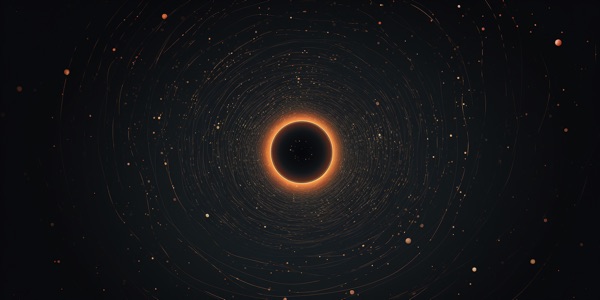
A black hole is a region in space where gravity is so intense that nothing, not even light, can escape its gravitational pull. They are formed from the remnants of massive stars that have undergone a gravitational collapse.
2. The Event Horizon
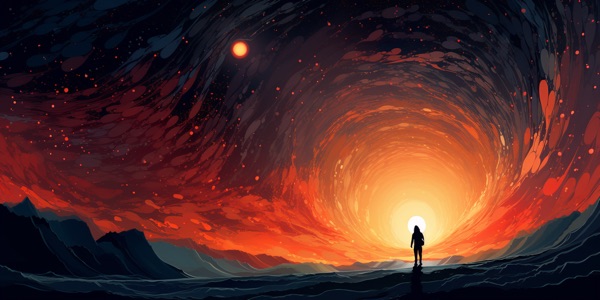
The event horizon is the boundary surrounding a black hole from which nothing can escape. Once an object crosses the event horizon, it is believed to be trapped within the black hole's gravitational pull.
3. Singularity
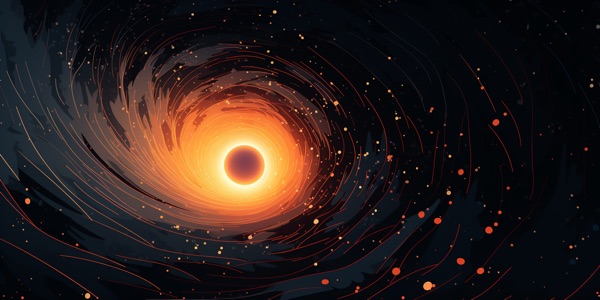
At the center of a black hole lies a point called a singularity. It is an infinitely dense and small region where the laws of physics, as we currently understand them, break down. The singularity is hidden from our direct observation, making it a subject of intense scientific research.
4. Effects of Black Holes
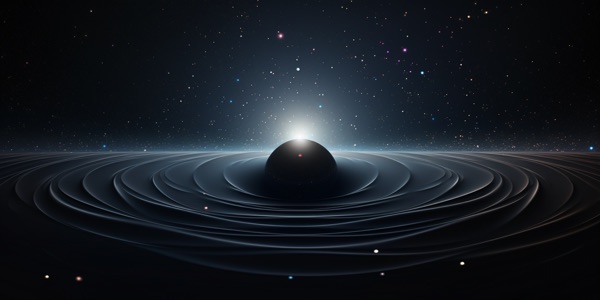
Black holes have a profound impact on their surroundings. Their immense gravitational force can distort space and time, causing nearby objects to be stretched or squeezed. They can also influence the movement of nearby stars and gas, leading to the formation of accretion disks and powerful jets of matter.
5. Black Hole Classification
Black holes are classified into three main types based on their mass: stellar black holes, intermediate black holes, and supermassive black holes. Stellar black holes are formed from the remnants of massive stars, while supermassive black holes reside in the centers of galaxies and can be millions or even billions of times more massive than our Sun.
6. Black Holes and Time Dilation
Due to the strong gravitational field around black holes, time dilation occurs. Time appears to pass slower for an observer near a black hole compared to a distant observer. This phenomenon has been confirmed through various scientific observations and experiments.
7. Theories and Research
Scientists continue to study black holes to unravel their mysteries. Advanced telescopes, such as the Event Horizon Telescope, have provided groundbreaking images and data about these cosmic objects. Theoretical models and simulations help scientists understand the behavior of black holes and their interactions with the surrounding environment.
 Lingard

 PROFILING: How Do They See Right Through You?
 Why Neural Networks Cannot Be Controlled
 Life is Over. What's Next?
 Space Exploration: Current Projects and the Future
 The Science of Changing Your Mind
 The Science of Our Past, Present and Future
 Using the Science of Luck to Transform Work, Love and Life
 Science of Food: Understanding Nutrition
 Climate Change: What You Need to Know
 Why Do We Sleep?
 Cutting Down on Coffee? Why Your Dreams May Feel Stronger
 The surprising foods that lead to better sleep