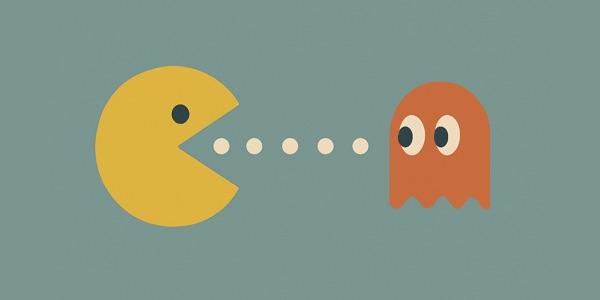
More than 45 years ago, a small yellow circle with a big mouth appeared in arcades around the world. Nobody expected that this simple character would become a symbol of fun, childhood, and the future of video games. But that's exactly what happened. Pac-Man was not just a game. It was the beginning of a new way to think about games — not only as something for boys who like to shoot or race, but as something that everyone could enjoy.
Today, Pac-Man is known everywhere. You can see his face on T-shirts, in cartoons, in movies, and even in science labs. He has no voice, no arms, and no special powers. But he is still one of the most famous game characters in history. Why? Because he was one of the first to make people feel connected — to laugh, to compete, to feel joy, and sometimes even frustration. He made gaming emotional.
The simple idea behind a big success
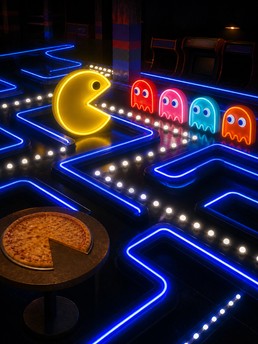
The story of Pac-Man began with a pizza. A Japanese game designer was eating one, and when he removed a slice, he looked down and saw a shape that looked like a mouth. That moment gave him an idea — what if a character was always eating, moving through a maze, trying to escape danger?
That idea became Pac-Man. In the game, you control the yellow character as he eats small dots in a maze. At the same time, four ghosts are chasing him. If they catch him, you lose a life. But if you eat a special glowing dot, the ghosts turn blue, and you can eat them for a few seconds. The game is fast, exciting, and a little scary — but in a fun way.
The controls are simple, just four directions: up, down, left, and right. But winning the game is not easy. You have to think fast, move smart, and learn how each ghost behaves. Some chase you directly. Others try to trick you. Every game feels different, and that keeps people coming back.
A game made for everyone, not just boys
In the early 1980s, most video games were about war, shooting, or space. They were fast, loud, and made mostly for boys and young men. Pac-Man was different. It had bright colours, fun music, and no violence. The goal was not to destroy, but to survive and eat.
The creator of the game said that he wanted to make something friendly — a game that women and children would also enjoy. That idea worked. For the first time, girls were playing side by side with boys in arcades. Families played together. Pac-Man changed the idea of who a gamer could be.
Later, a version called Miss Pac-Man was released. She had her own style, her own mazes, and even a bow on her head. She became just as popular as the original and showed that characters could have personality, even without words.
The beauty of simple design
Pac-Man was special because it was easy to start, but hard to master. You could learn it in a minute, but it could take months to really get good. The game had clear rules, a smart layout, and each ghost had its own unique style. Players didn't just play — they learned, improved, and created strategies.
Back then, people read magazines and books about how to win at Pac-Man. They memorized maps and movements. There were even tournaments with prizes. This showed that games could be more than short-time fun — they could be serious challenges.
And still, everything looked so simple. A black screen, a yellow circle, some coloured ghosts. That was the magic: no complicated graphics, but lots of emotion.
Pac-Man in science, art, and emotion
Pac-Man didn't just change arcades. Scientists also started using the game in research. They studied how people reacted when the ghosts came close. They watched how monkeys played it and made decisions. The game became a tool to learn more about thinking, memory, and behaviour.
Pac-Man also changed how people thought about characters in games. Before him, most games had no real characters — just spaceships or blocks. But Pac-Man had a face. He reacted. He showed when he was in pain or happy. This helped players feel connected. They weren't just pressing buttons. They were helping someone.
That feeling is now common in games. We care about the characters we play. We want them to win, to survive, to grow. Pac-Man was one of the first games to create this emotional link.
The feeling of childhood
For many people, Pac-Man brings back memories. Of visiting arcades, spending coins, and playing for hours. Of laughing with friends, trying to beat high scores, and feeling proud after a good game. It reminds us of a time before smartphones, before downloads — when games were simple, but full of heart.
Even today, children who never lived in the 1980s know who Pac-Man is. His face is on toys, lunchboxes, and posters. That's because he is more than just a game character. He is a feeling — a reminder that fun doesn't need to be complicated.
What's next for Pac-Man?
New Pac-Man games continue to appear. Some are modern, with 3D graphics and sci-fi worlds. Others keep the old style, but add new challenges. In one version, Pac-Man becomes part of a robot, exploring a fantasy maze. These games keep the same idea: run, eat, escape, survive.
Even outside of games, Pac-Man is finding new life. There are events, escape rooms, and brand collaborations. Companies use his face to sell things, from food to clothes. Some people even say he could have his own movie one day.
But no matter where he appears, Pac-Man always brings the same feeling: playfulness, colour, and joy. He doesn't speak, but he says something important — that even a simple game can stay in your heart forever.
 Lingard
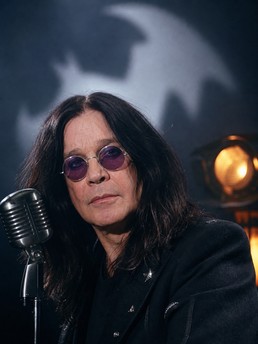 Ozzy Osbourne: The Prince of Darkness and the King of Chaos
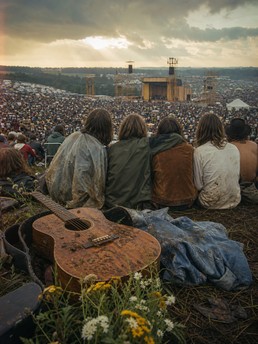 The Spirit of Woodstock: The Birth of a Revolution
 The Impact of Social Media on Mental Health
 Traditions and Rituals of Various Wedding Cultures Around the World
 The Role of Theater in Modern Society: Cultural Theatrical Performances and Their Influence on Audiences
 Museums of the World: Their Role in Preserving and Educating Cultural Heritage
 What body odour reveals about your health
 What You Didn't Know About Japan
 Three Levels of Your Personality: Who Are You?
 Explore the Boundaries of Freedom and Liberty's True Essence
 Myths and Legends of Various Cultures: Their Role in Shaping National Identity
 Traditional Crafts and Their Role in Preserving Cultural Heritage