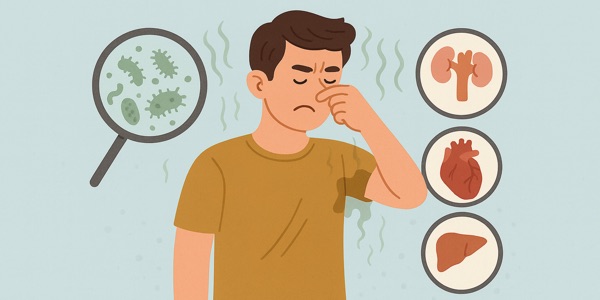
Most of us don't give much thought to the way we smell — at least not beyond a morning shower or a spritz of perfume. Yet our bodies constantly emit a complex blend of chemical scents through our skin, breath, and sweat. While many of these smells are faint or undetectable to the human nose, researchers are discovering that certain subtle changes in body odour could serve as early warning signs of illness — sometimes appearing long before any visible symptoms develop.
When intuition meets science
The story begins with a surprising claim. Perdita Barran, a respected analytical chemist, first heard about Joy Milne through a colleague. Joy, a retired nurse, believed she could smell Parkinson's disease. She noticed a musky, unfamiliar scent on her husband years before his official diagnosis — a scent she later recognised in other Parkinson's patients. Naturally, scientists were sceptical. After all, could someone really "smell" disease?
To test this, Barran and her team invited Milne to sniff a series of T-shirts previously worn by individuals with and without Parkinson's. Astonishingly, Joy correctly identified all the shirts worn by people with the disease — and even flagged one that hadn't been diagnosed yet. That individual was later confirmed to have Parkinson's. This remarkable result sparked serious scientific interest in the connection between scent and disease.
The invisible signals our bodies release
It now seems plausible that illnesses may alter our natural scent. These changes are linked to shifts in our metabolism, the chemical processes that keep us alive. When disease disrupts metabolism, it changes the body's production of volatile organic compounds (VOCs) — tiny chemicals that easily evaporate and can be detected by smell.
Many of these VOCs are emitted through our skin, breath, or bodily fluids. Different health conditions may create distinctive odours. For example, uncontrolled diabetes can lead to ketosis, which gives breath a fruity or “rotten apple” smell. Liver disease may result in a musty or sulphurous scent, while kidney problems might cause an ammonia-like or fishy odour. These are not just folklore or anecdote — they are being confirmed through modern chemical analysis.
From dogs to devices: tools of detection
For years, dogs have been trained to detect diseases and even predict seizures. Their noses are thousands of times more sensitive than ours, allowing them to identify chemical signals that humans miss entirely. But while dogs are valuable in controlled settings, they are not a practical diagnostic tool for the general public.
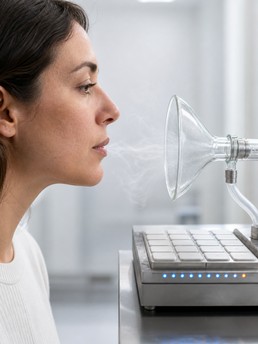
That's why scientists like Barran are working to develop technology that mimics the dog's olfactory power. Her team uses advanced tools like gas chromatography-mass spectrometry to identify specific chemical patterns in sebum — the oily substance produced by our skin. In Parkinson's patients, they found about 30 compounds that are consistently altered. Their goal is to develop a simple, non-invasive skin-swab test that can detect these compounds — potentially allowing for much earlier diagnosis than is currently possible.
How disease changes our scent
The scientific explanation lies deep within our cells. Mitochondria, the tiny powerhouses of cells, are responsible for converting nutrients into energy. During illness, this process can go awry, leading to the buildup of certain byproducts — some of which are volatile and released through the skin or breath. This explains why changes in metabolism can lead to noticeable, and even diagnostic, shifts in body odour.
Research is increasingly showing that this scent-based approach can apply to a wide range of conditions. In viral infections, cancer, and even brain injuries, distinct chemical markers appear in bodily emissions. With the right tools, these changes could be tracked and used for medical insight.
Looking ahead: scent as a medical tool
The potential of odour-based diagnostics is vast. Researchers are already exploring scent-based tests for diseases ranging from prostate cancer to malaria. Some scientists are training mice to detect specific diseases, while others are building synthetic “noses” — devices equipped with human olfactory receptors and powered by artificial intelligence. These technologies aim to identify unique chemical signatures in real time, at scale, and with high accuracy.
Such tools could be especially useful in low-resource settings, where traditional lab tests are expensive or unavailable. A handheld sensor that detects disease through breath or skin could revolutionize early detection — saving time, money, and lives.
From one woman's nose to a global breakthrough
Though Joy Milne is no longer regularly involved in scent detection — the process is exhausting and emotionally taxing — her contribution has already made a lasting impact. Her intuitive observation opened the door to a new field of medical research. It reminds us that science often begins with a simple, human insight — and that when such insight is tested rigorously, it can lead to discoveries that change the world.
In the future, doctors may routinely check for disease using scent-based tools, catching conditions in their earliest stages. What was once an unusual claim — that disease has a smell — is now becoming a scientific reality. And it all began with one woman, one nose, and one deep love for her husband.
 Lingard
 Should we all be taking vitamin supplements?
 How Long Can You Stay Awake? Exploring the Limits of the Human Body
 Cutting Down on Coffee? Why Your Dreams May Feel Stronger
 The surprising foods that lead to better sleep
 Sourdough vs White Bread: What Should We Be Eating?
 How noise sensitivity disrupts the mind, brain and body
 Why Do We Sleep?
 Why Neural Networks Cannot Be Controlled
 Space Exploration: Current Projects and the Future
 The Science of Changing Your Mind
 Why you age slower on a plane
 The school for astronauts hidden inside a Swiss mountain