
The vast expanse of the universe, much beyond the confines of our Milky Way, has always been a subject of wonder and curiosity. With each passing year, we unveil new secrets, from distant exoplanets to mesmerizing cosmic events. Let's journey through this fascinating realm and understand the marvels that lie beyond our galactic home.
1. The Concept of Exoplanets
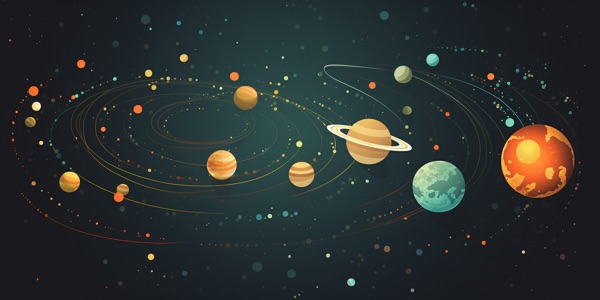
Exoplanets, or extrasolar planets, are celestial bodies that orbit stars outside our solar system. First confirmed in the 1990s, their discovery challenged our understanding of planetary formation and environments. The techniques like the transit method and radial velocity have enabled us to detect these distant worlds.
2. Diversity of Exoplanets

The diversity among exoplanets is staggering. From gas giants larger than Jupiter, termed 'hot Jupiters', orbiting very close to their parent stars, to rocky planets in the habitable zones where conditions might be right for liquid water, the range is vast. Each discovery provides clues about planet formation and the potential for life elsewhere.
3. Cosmic Phenomena: Supernovae

Supernovae are explosive events marking the end of a star's life cycle. These stellar explosions are among the most energetic events in the universe, dispersing elements like iron and gold into space, which eventually form new stars and planets. Observing them helps astronomers understand stellar evolution and the universe's expansion.
4. Black Holes: The Cosmic Enigmas
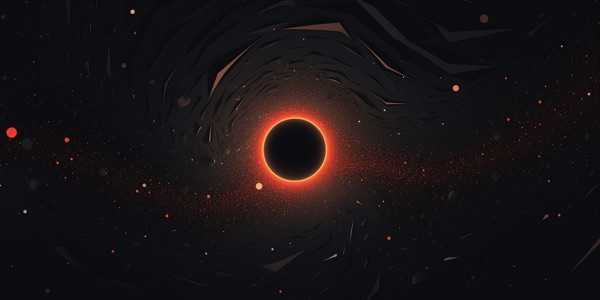
Black holes, regions in space where gravity pulls so much that not even light can escape, are yet another marvel. Recent observations, like the first-ever image of a black hole's event horizon, have provided invaluable insights into their nature, size, and influence on surrounding celestial bodies.
5. Pulsars and Neutron Stars
Pulsars are highly magnetized rotating neutron stars emitting beams of electromagnetic radiation. They are cosmic lighthouses, sending out pulses of radiation with clock-like precision. Their study helps in understanding extreme states of matter and refining the principles of general relativity.
6. The Mystery of Dark Matter and Dark Energy
While we observe stars, galaxies, and other celestial objects, a significant portion of the universe remains invisible. Dark matter and dark energy, though not directly observable, influence the universe's structure and expansion. Researchers are continuously striving to decode these mysterious entities.
7. The Continuous Quest for Extraterrestrial Life

One of the most intriguing questions in astronomy is whether we are alone in the universe. The discovery of exoplanets, especially those in the habitable zones, has rekindled the hope of finding extraterrestrial life. While no concrete evidence exists yet, the search continues, driven by projects like SETI and space telescopes.
 Lingard
 The school for astronauts hidden inside a Swiss mountain
 The Universe's Prime Number: The Mystery of Alpha and the Blueprint of Reality
 How Long Can You Stay Awake? Exploring the Limits of the Human Body
 A Brief History of Humankind
 Evolution of Medicine: From Traditional Methods to Modern Discoveries
 Exploring Outer Space: Current Missions and Future Prospects
 Breakthroughs in Nanotechnology: A Revolution in Science on a Microscopic Scale
 Cutting Down on Coffee? Why Your Dreams May Feel Stronger
 The surprising foods that lead to better sleep
 Why you age slower on a plane
 Should we all be taking vitamin supplements?
 Sourdough vs White Bread: What Should We Be Eating?