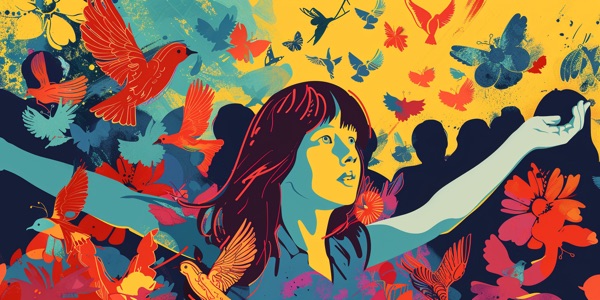
It was the summer of 1969, a time when the world seemed to be changing faster than anyone could comprehend. America was at the crossroads of social unrest, civil rights struggles, and an escalating war in Vietnam. The youth were rising up, challenging the old order, and embracing the ideals of peace, love, and freedom. In the small town of Bethel, New York, something extraordinary was about to unfold — a moment that would come to define an entire generation.
Woodstock, originally conceived as a simple music festival, became the symbol of a revolution, a beacon for counterculture movements not just in America, but around the world. It was not just a gathering of music lovers — it was the meeting ground for those who sought to redefine what it meant to live in the world, to break free from the constraints of traditional values and embrace a new, more inclusive, and liberated society.
The Birth of Woodstock
It all started with the vision of four young men: Michael Lang, John Roberts, Joel Rosenman, and Artie Kornfeld. They wanted to create a place where people could come together to celebrate music and peace. But what began as a simple idea for a music festival turned into something far greater. Despite facing numerous challenges — financial issues, location changes, and lack of proper organization — the festival took place on a sprawling dairy farm in Bethel.
The site, which was intended for 50,000 attendees, was soon overwhelmed by over 400,000 people, all eager to witness what would be one of the most iconic cultural events of the 20th century. The festival's location became an oasis of freedom, where long-haired youths, artists, musicians, and activists united in a shared experience. The atmosphere was unlike anything anyone had ever seen: a place where people, regardless of race, religion, or background, gathered to escape the world's chaos and revel in the spirit of unity.
The Cultural Tsunami: Performers and the Impact
Woodstock wasn't just a musical event — it was the stage for some of the most legendary performances in history. The lineup read like a who's who of rock and roll, folk, and blues: Jimi Hendrix, Janis Joplin, The Who, Crosby, Stills, Nash & Young, Sly and the Family Stone, and Joe Cocker, among others. Each performance carried with it a message, not just of entertainment, but of protest, change, and hope for a better future.
Jimi Hendrix's rendition of “The Star-Spangled Banner” became an anthem for the generation, a powerful statement on the state of America, especially in the midst of the Vietnam War. His fiery guitar echoed the struggles and frustrations of young people who felt disconnected from the older, establishment-driven ideals of the time. It was an act of rebellion, a declaration of individuality, and a call for peace all in one.
Janis Joplin's powerful voice resonated with the pain of a generation, while the soul of Sly and the Family Stone's performance brought people together, transcending the boundaries of race and class. It wasn't just music; it was an invitation to think, to reflect, and to dream. For the first time, millions of people were not only entertained — they were part of something bigger than themselves.
The Legacy of Woodstock
Woodstock wasn't perfect — there were logistical issues, mud, and some unplanned chaos — but it embodied the ideals that defined the 1960s counterculture: peace, love, and the rejection of authority.
It wasn't about a weekend of music; it was about an ideal. Woodstock became a symbol of rebellion against the norms of the previous generation, a challenge to the traditional structures of power, war, and inequality.
The festival's impact didn't end with the last chord of music played. It echoed through the civil rights movement, the anti-war protests, the feminist movement, and the broader counterculture that sought to redefine society's values. Woodstock was not just a musical event — it was a cultural awakening. It showed the power of youth to challenge the status quo and demand a world of greater equality and understanding.
In the decades that followed, the spirit of Woodstock lived on, inspiring countless other movements and events. It showed that when people come together with a shared purpose — whether for music, peace, or justice — there is nothing they cannot accomplish.
Conclusion: The Spirit Lives On
Woodstock was more than just a music festival; it was a cultural watershed that captured the essence of a generation. The values of peace, freedom, and unity that it promoted continue to resonate today. While the world has changed, the lessons of Woodstock remain timeless: that art can be a powerful force for social change, that young people can challenge the old ways of thinking, and that the spirit of love and community can bring us together in ways that transcend our differences.
In the end, Woodstock wasn't just about the music — it was about creating a moment in history that would echo through the ages. It was a reminder that we are all part of something larger than ourselves, and that, sometimes, in the midst of chaos, we find our truest selves.
 Lingard
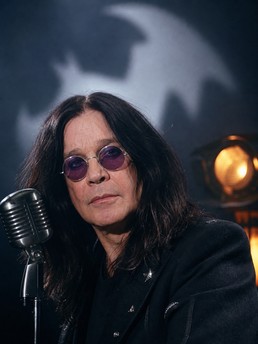 Ozzy Osbourne: The Prince of Darkness and the King of Chaos
 In Search of the Sacred in Modern India
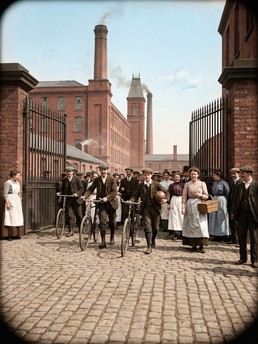 Where Did the Weekend Come From?
 It's a reminder of childhood: How Pac-Man changed gaming – and the world
 A Brief History of Humankind
 Traditions and Rituals of Various Wedding Cultures Around the World
 The Role of Theater in Modern Society: Cultural Theatrical Performances and Their Influence on Audiences
 Museums of the World: Their Role in Preserving and Educating Cultural Heritage
 Why you age slower on a plane
 What You Didn't Know About Japan
 Three Levels of Your Personality: Who Are You?
 Explore the Boundaries of Freedom and Liberty's True Essence