 Lingard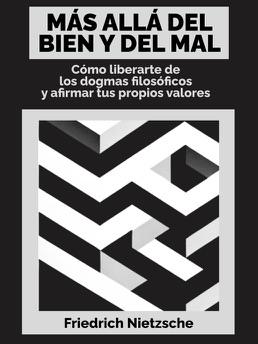
Más allá del bien y del mal
Friedrich Nietzsche
Friedrich Nietzsche, a key figure in philosophy, challenges conventional morality and the dichotomy of good and evil, urging a re-evaluation of societal norms and values. He provocatively suggests that traditional moral truths are human constructs, shaped by historical contexts and the will to power, rather than universal absolutes. Nietzsche's philosophy advocates a "reassessment of all values", encouraging people to embrace ambiguity and create their own principles, even if they contrast with societal norms. His critique extends to historical philosophy, which he believes has failed to question the legitimacy of conventional moral distinctions, often reflecting cultural biases and power dynamics rather than universal truths. Through his exploration of the "will to power," master-slave morality, the concept of the Übermensch, and the idea of eternal recurrence, Nietzsche invites a radical reconsideration of morality, ethics, and social organization. He challenges readers to question, grow, and become architects of their destiny, charting a course beyond inherited moralities. His work is a call to action for intellectual rebellion and self-discovery, highlighting the infinite possibilities when we dare to think beyond conventional wisdom.
Get startedNot sure about your level? Spanish level test
 12 Reglas para la Vida
 La práctica de no pensar
 Liderando una Vida Inspirada
 Vidas de los Estoicos
 Haciendo Sentido
 O bien/Otra cosa
 Cuatro Mil Semanas
 Crítica de la Razón Pura
 Mi cuaderno estoico
 Convertirse en Beauvoir
 Edipo Rey
 Hábitos Atómicos