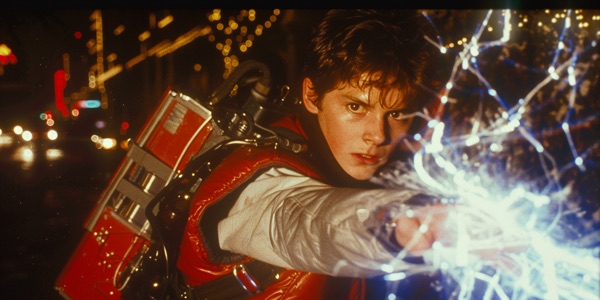
The Origin of the Idea
The idea for Back to the Future has a surprisingly personal origin. Screenwriter Bob Gale found inspiration while sorting through his parents' belongings. He stumbled upon his father's old high school photo album and started to wonder: would he and his father have been friends if they had been teenagers at the same time? This seemingly simple question sparked the creation of one of the most iconic trilogies in film history. Gale imagined what it would be like to meet his parents as young adults, and with director Robert Zemeckis, this idea transformed into Marty McFly's thrilling time-traveling adventures with Doc Brown.
Challenges in Getting the Film Made
Creating Back to the Future wasn't an easy journey. The original script was rejected 44 times before a studio finally agreed to produce it. Many studios doubted the appeal of time-travel movies. Disney, for example, refused to support the project, citing concerns over the storyline where Marty's mother, Lorraine, develops a crush on him in the past. They considered it too controversial for their family-friendly brand. Universal Pictures eventually took the risk, and the movie became a massive hit. Interestingly, Gale and Zemeckis retained ownership of the trilogy's rights. They have since declared that no reboots or remakes will be allowed during their lifetimes, preserving the films' legacy.
The DeLorean: From a Car to a Time Machine Icon
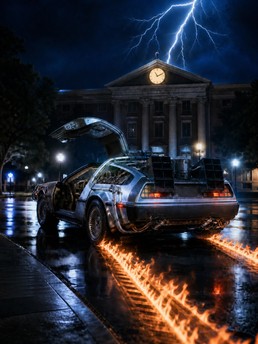
One of the most recognizable symbols of the trilogy is the DeLorean time machine. Its sleek, futuristic design and gullwing doors made it the perfect choice to embody the sci-fi elements of the story. Originally, the script called for a refrigerator as the time machine, but this was changed for practical and safety reasons. The DeLorean's unique look also played a key role in the plot, as its unusual design led people in 1955 to believe it was an alien spaceship. The film's success brought unexpected fame to the car's creator, John DeLorean, who personally thanked the filmmakers for immortalizing his creation.
Casting Changes and Challenges
Casting Marty McFly was a rollercoaster for the production team. Initially, Eric Stoltz was cast in the role and filmed for five weeks. However, it became clear that Stoltz's performance lacked the comedic charm needed for Marty. He was replaced by Michael J. Fox, who was already starring in the TV show Family Ties. Fox's packed schedule meant he had to film the series during the day and work on Back to the Future at night, often getting little to no sleep. Another major casting change involved Marty's girlfriend, Jennifer Parker. Actress Melora Hardin was replaced because she was taller than Michael J. Fox, and producers thought this would look awkward on screen. Claudia Wells ultimately took on the role.
Iconic Scenes and Improvisation
Some of the trilogy's most memorable moments were created on the spot. For example, the scene where Lorraine accidentally hits her head on the DeLorean's gullwing door wasn't scripted. The door's mechanism malfunctioned during filming, and the team decided to include the incident in the final cut. Another unforgettable scene is Marty's performance of Johnny B. Goode at the high school dance. Although Michael J. Fox didn't sing or play the guitar himself, his genuine enthusiasm and musical background made the scene incredibly believable.
Unexpected Success and Timeless Legacy
When Back to the Future premiered on July 5, 1985, it quickly became the highest-grossing film of the year, earning $381 million worldwide on a modest $19 million budget. Its success was so overwhelming that it led to two sequels, an animated series, a stage musical in London, video games, and countless fan merchandise. The trilogy's influence on pop culture is undeniable, and its mix of humor, creativity, and heart has cemented it as a timeless classic. In 2007, the screenplay was added to the U.S. Library of Congress for its cultural and historical significance.
The Back to the Future trilogy isn't just a story about time travel; it's a testament to the power of imagination, determination, and the magic of storytelling. Decades after its release, it continues to captivate audiences, proving that some movies truly stand the test of time.
 Lingard
 Shrek: Fun Facts You Didn't Know
 Stranger Things: Surprising Facts About the Show
 Fun Facts About the Madagascar Movies
 Interesting Facts About the Venom Movies
 Fascinating Facts About the Ice Age Movies
 The Truth and Lies About Titanic in the Movie
 Home Alone - Interesting Facts You Didn't Know About the Movies
 Sherlock - Interesting Facts You Didn't Know About the Series
 Green Book: What the Film Teaches Us
 The Devil Wears Prada: What the Film Teaches Us
 The Secrets of Oppenheimer: What the Film Really Tells Us
 The Secrets of Tenet: What the Film Really Tells Us