Introduction
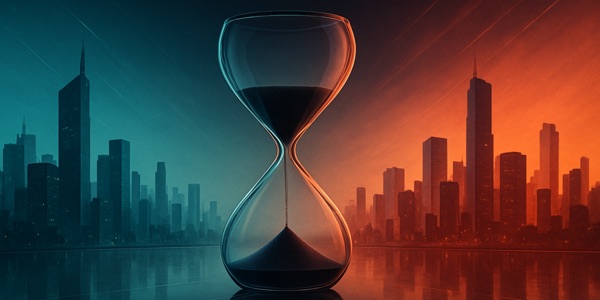
Tenet by Christopher Nolan is much more than a spy action film. On the surface, it looks like a story about agents, weapons, and secret missions. But under this action lies something deeper. Nolan built the film as a puzzle, where every scene, every object, and even the structure of the story has symbolic meaning.
At the center of the film we find the strange concept of time inversion — the idea that objects and even people can move backwards in time while the rest of the world goes forward. Around this science-fiction element, Nolan asks bigger questions: What does it mean to have free will? Can human choices change history? What is the price of loyalty and sacrifice? The film gives no simple answers, but it invites us to look closer and see the hidden truths.
The War of Future and Past
The main conflict is not between nations or governments, but between different moments in time. In the future, the Earth suffers from a terrible climate disaster. Some people in that future believe the only way to survive is to destroy the past. They send technology back in time to help them achieve this.
Here lies the paradox: if the future destroys the past, then the future will also disappear. The two are connected and cannot exist without each other. Nolan uses this idea to show that trying to change or erase the past is a dangerous illusion. The war in Tenet is not really about winning or losing, but about accepting that past and future are part of the same line of existence.
The Protagonist as Architect
The main character has no name. He is only called “the Protagonist”. At the beginning he is simply a soldier who follows orders. He trusts his training and his duty, but he has no larger vision of what is happening around him. He looks like just another player in a big and confusing game.
Step by step, he learns that he is not only part of the game — he is the one who created it. In the future, he will become the founder of Tenet, the organization that fights to protect the world through time. This discovery changes his identity completely. He moves from being a pawn to becoming the architect of events. When he finally declares “I am the Protagonist”, he does not only describe his role in the story. He accepts that he is the beginning of the cycle itself.
Neil and Friendship Across Time
Neil is one of the most complex and mysterious figures in the film. At first he appears as a simple ally, someone friendly who helps the Protagonist in missions. But soon it becomes clear that Neil knows more than he should. He always seems one step ahead, as if he has already lived through the events.
The small red cord on his backpack is a quiet clue: we see it earlier, even before the Protagonist understands Neil's role. In the final battle Neil sacrifices himself, opening the locked gate and saving the team. For the Protagonist it feels like the end of a friendship, but for Neil it was only another step in a relationship that began long ago — in his past, but in the Protagonist's future. This strange order of time shows that real loyalty is not limited by direction. Nolan reminds us that human connections can be stronger than time itself.
Kat and the Freedom of Choice
Kat is first introduced as the unhappy wife of Sator. She is controlled by him through fear, money, and even their child. To the Protagonist and to the audience, she may look powerless. But her character is about finding courage and taking back her freedom.
Her most important moment comes on the yacht. While the Protagonist and Neil fight to stop the Algorithm, Kat makes her own decision. She kills Sator, not because it is part of the plan, but because she wants to end his control and save herself and her son. The beauty of this scene is that her personal act happens at the exact same time as the global victory. Nolan shows that private choices, made for love and dignity, can connect with the destiny of the whole world. Kat becomes a symbol of free will in a universe where everything seems already decided.
Sator and the Philosophy of Destruction
Andrei Sator is the villain, but he is also a dark mirror of human weakness. He is dying, and he cannot accept it. His answer to death is not peace but revenge. If he cannot live, then nobody will. His deal with the future is not about saving humanity, but about using technology to control and destroy.
His philosophy is simple and cruel: “If the world is not mine, then nobody will have it”. Through Sator, Nolan shows the danger of selfish power. He represents the kind of man who would risk all life for his own fear and pride. Sator is not only an enemy for the Protagonist; he is the picture of how destructive human ego can become when it refuses to accept limits.
The Algorithm and the Threat of Technology
The Algorithm is the most mysterious object in the story. It is not a normal weapon or a machine. It is a mathematical formula that, if activated, could reverse the entire Earth. The people in the future want to use it to erase the past, thinking this will save them.
But the Algorithm is a warning. It shows how dangerous technology can be when people do not fully understand it. Humanity often creates things more powerful than itself — nuclear weapons, climate-changing industry, artificial intelligence. Nolan uses the Algorithm as a symbol of this danger. The threat is not only the object itself, but the human decision to use it without wisdom.
Symmetry and Palindrome
The film is designed as a palindrome, something that is the same forward and backward. Even the title Tenet is a palindrome. This is not only a trick but a key to the story.
The structure of the film reflects this idea. The opening scene at the opera mirrors the final battle. The first use of inversion mirrors the last. The first meeting with Neil mirrors the final goodbye. Watching the movie is like walking through a mirror where every step forward has a reflection going back. Nolan wants us to feel that time in the film is not linear but folded, symmetrical, and endless.
The Ending and Its Meaning
The ending is not simple. It is not just about winning a battle. It is about understanding identity. The Protagonist finally accepts his role as the founder of Tenet. He knows the war will continue, because time itself never stops. But now he sees that he is not a small piece of history — he is the one who created the history.
Neil goes to his death, but the Protagonist understands that their friendship is not finished. For Neil, it was long and full; for him, it is just starting. Kat finds her freedom and secures a safer future for her son. The Algorithm is hidden, safe from both the past and the future. The film closes its cycle, but it also opens the idea that the fight between destruction and human choice will never truly end.
Conclusion
Tenet is not only an experiment with time inversion and spectacular action. It is a story about responsibility, free will, and the meaning of human choices. The past and the future are tied together, but what defines humanity is the decision to act with love, loyalty, and courage.
Nolan shows that the true power is not in controlling time but in being human. Technology can destroy or save, but only human connection gives life meaning. The Protagonist, Neil, Kat, and even Sator all show different faces of power and choice. In the end, the message is clear: humanity is saved not by weapons or machines, but by sacrifice, by friendship, and by the freedom to choose.
 Lingard
 Green Book: What the Film Teaches Us
 The Devil Wears Prada: What the Film Teaches Us
 The Secrets of Oppenheimer: What the Film Really Tells Us
 Fascinating Facts About the Barbie Movie
 Surprising Facts About Squid Game
 Breaking Bad: Surprising Facts You May Not Know
 The Hunger Games: Interesting Facts You Didn't Know About the Movies
 Harry Potter: The Most Interesting Facts You Didn't Know
 Shrek: Fun Facts You Didn't Know
 Stranger Things: Surprising Facts About the Show
 The Secrets of Emily in Paris: What the Show Really Tells Us
 Fun Facts About the Madagascar Movies