Introduction
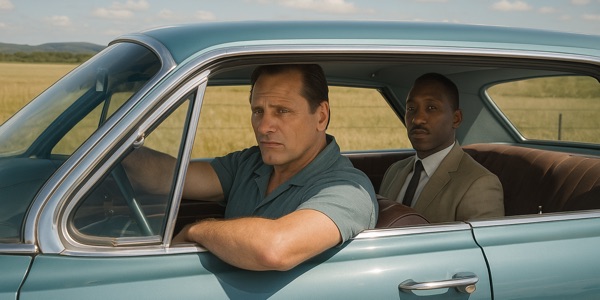
Green Book is more than a road movie about two men traveling through the American South in the 1960s. It tells the true story of Tony “Lip” Vallelonga, a talkative Italian American driver, and Doctor Don Shirley, a talented Black pianist. On the surface, it looks like a story about a trip. But behind it lies something deeper — a lesson about friendship, respect, and dignity in a divided world. The film shows how small acts of kindness can challenge prejudice and change people from the inside.
Two Men on the Road
When Tony starts his job, he sees it only as work. He must drive Don Shirley to concerts across the South and make sure he stays safe. At first, they are very different — Tony is loud, emotional, and eats fried chicken with his hands; Don is quiet, careful, and lives by rules. They argue, laugh, and learn about each other day after day. The car becomes a small world where they must share space, music, and silence. Outside, they face racism and injustice; inside, they build trust. The long road slowly turns strangers into friends.
The Green Book and the World Around Them
The title of the film comes from “The Green Book”, a real travel guide used by Black Americans during segregation. It listed safe hotels and restaurants where they could stay. For Don, every concert means risk — he never knows if a place will accept him. Tony is shocked to see how unfair the world is. Together they visit places where Don is treated as less than human, even when he is the star of the show. The guide becomes a symbol of how people learned to survive with dignity in a system built to exclude them.
Class, Power, and Protection
At the beginning, Tony believes his job is to protect Don from danger. But as the trip continues, he learns that real protection means more than using fists. It means defending Don's right to be respected — to eat at the same table, to stay in a decent hotel, to be treated with basic humanity. Don, on the other hand, learns that sometimes rules and distance cannot protect him from pain. Both men teach each other something: Tony learns patience and respect, and Don learns to trust someone who is so different from him.
Music and Connection
Music is the bridge between them. Don Shirley's concerts show his discipline, elegance, and control. He plays classical and jazz pieces that touch the hearts of his audience, even when they do not accept him as a person. Tony begins to listen differently — he hears the emotion behind the notes. In return, Don listens to Tony's simple songs and discovers warmth and joy. Music becomes their shared language, a way to connect when words are not enough.
Humor and Humanity
One reason the film feels so human is its humor. The two men argue about everything — food, words, clothes — but their fights often end in laughter. The jokes in the car give them strength when the world outside feels cruel. Humor becomes a way to survive, a small moment of freedom that helps them continue the journey. Through laughter, they find common ground and begin to see each other not as employer and worker, but as equals.
Loneliness and Identity
Don Shirley's life is full of contradictions. He is respected as a genius, but he lives alone above Carnegie Hall. White audiences admire his music but not his color, and some Black people think he is too distant from their world. On the road, his loneliness becomes clear. Tony, who is simple but loyal, gives him something he has missed — real friendship. Their conversations in the car and their quiet dinners show that companionship can heal the pain that success cannot.
The Lesson of Dignity
The film's most powerful moments come when Don refuses to accept humiliation. He chooses dignity, even when it costs him comfort or safety. When a restaurant denies him entry or a hotel gives him a dirty room, he stands firm. Tony, watching this, learns that courage is not only about fighting but about saying “no” to disrespect. Together they learn that real strength comes from standing up for what is right, even when no one else does.
The Ending and Its Meaning
After many miles, cold nights, and difficult moments, the journey ends with warmth. Tony invites Don to join his family for Christmas dinner. It is a simple gesture — one seat at the table — but it carries great meaning. Don, who has been excluded so many times, finally feels welcome. The scene shows that real change often begins in small, human moments: a meal shared, a door opened, a hand offered.
Conclusion
Green Book is not only a story about racism or history. It is a story about empathy — the ability to listen, to protect, and to understand someone different from you. The film reminds us that respect grows slowly, through daily actions and honest contact. It shows that friendship can break walls that laws cannot. In the end, its message is quiet but strong: change begins with simple kindness and the courage to treat another person as equal.
 Lingard
 The Devil Wears Prada: What the Film Teaches Us
 The Secrets of Oppenheimer: What the Film Really Tells Us
 The Secrets of Tenet: What the Film Really Tells Us
 Fascinating Facts About the Barbie Movie
 Surprising Facts About Squid Game
 Breaking Bad: Surprising Facts You May Not Know
 The Hunger Games: Interesting Facts You Didn't Know About the Movies
 Harry Potter: The Most Interesting Facts You Didn't Know
 Shrek: Fun Facts You Didn't Know
 Stranger Things: Surprising Facts About the Show
 The Secrets of Emily in Paris: What the Show Really Tells Us
 Fun Facts About the Madagascar Movies