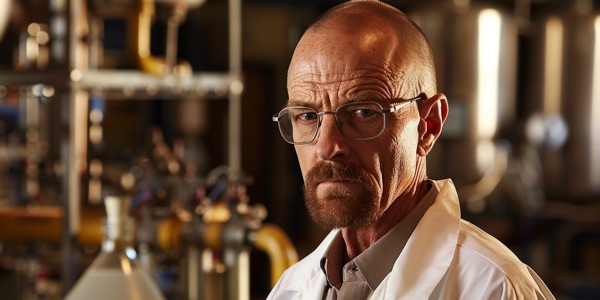
"Breaking Bad" is one of the most famous TV series in history. It follows Walter White, a high school chemistry teacher who starts making illegal drugs after learning he has cancer. Many people know the basic story, but there are many interesting details behind the scenes that you might not have heard before. Let's look at some surprising facts about the show, its creation, and its influence on fans and culture.
Changes in Location and Character Plans
Originally, the writers planned to set "Breaking Bad" in Riverside, California. However, they decided to film in Albuquerque, New Mexico, to save money because of local tax benefits. This change also gave the series its unique desert landscapes, which became a symbol of Walter's secret activities.
Early in the story, Jesse Pinkman was supposed to appear only for a short time. The writers even considered killing him off by the end of the first season. But when they saw Aaron Paul's excellent acting, they changed their minds and kept Jesse alive for all five seasons. In fact, this decision made the relationship between Walter and Jesse one of the strongest parts of the show.
Walter White's Transformation from Teacher to Criminal
The creator, Vince Gilligan, wanted Walter White to start as a gentle, shy man and slowly turn into a cruel criminal. He said he wanted to change “Mister Chips into Scarface”, meaning a nice teacher into a dangerous gangster. At the beginning, Walter is nervous, wears simple clothes, and does not know how to hold a gun. By the end, he is calm, confident, and capable of terrible violence. Actor Bryan Cranston worked closely with costume designers and makeup artists to show this change step by step. For example, at first Walter wears soft, neutral colors, and later he often wears darker clothes that show his growing darkness.
Casting Choices and Avoiding Big Stars
Before Bryan Cranston got the role of Walter, rumors said other famous actors like John Cusack or Matthew Broderick might play him. But Vince Gilligan insisted on Cranston because he knew from previous work that Cranston could show both kindness and cruelty in one character.
The show also preferred to avoid very famous stars. The idea was that unknown actors would help viewers believe in the story more easily. For example, R.J. Mitte, who played Walter Jr., really has cerebral palsy, but a milder form. For the role, he learned to walk with crutches and speak more slowly to match the character. This casting choice gave the show a sense of realism and authenticity.
Accidents, Surprises, and Real-Life Problems
One of the most famous scenes is when Walter throws a pizza onto his house's roof. This happened by accident on the first try, and the producers loved it so much that they kept it in the show. After this episode aired, some fans visited the real house in Albuquerque and copied the scene, throwing pizzas on the roof. The homeowners became upset, and they finally installed a fence and security cameras to stop this behavior.
This funny accident shows how much fans were influenced by the show. It also reminds us that not everything we see is planned—sometimes the best moments come from lucky mistakes.
Avoiding Glorifying Crime and Drug Use
Some people worried that "Breaking Bad" might make the drug world look cool or exciting. Before the first episode aired, the TV network AMC received letters from people who were afraid that the show would “glorify” crime. But after watching the series, it's clear that the show never makes crime look good. Instead, it shows the pain, fear, and destruction that come from Walter's choices. The show's creators wanted to be honest about the consequences of illegal actions. Because of this honesty, the worried letters stopped after the series began.
Scientific Details and Realism
"Breaking Bad" often shows Walter White using his chemistry knowledge to cook drugs. To make these scenes more believable, the producers asked a real chemistry professor to check some of the scientific details. She made sure the formulas looked correct and that the science talk sounded real.
However, the show never gives a full, real recipe for the drug. Also, some scenes are scientifically impossible—like dissolving a bathtub with acid or causing certain explosions—because the writers did not want to teach people how to do dangerous things. The goal was realism in feeling, not creating an instruction manual for crime.
The Show's End and Its Continued Story
"Breaking Bad" lasted for five seasons. Vince Gilligan decided to end it before it became boring or repetitive. He believed it was better to have a strong finish than to keep going without good ideas. After the show ended, fans still wanted more. This led to the creation of “Better Call Saul”, a spin-off that takes place before "Breaking Bad" and focuses on the lawyer Saul Goodman. There is also a movie called “El Camino”, which continues Jesse Pinkman's story after the final episode of the series.
These new stories gave fans the chance to spend more time in the "Breaking Bad" universe, exploring characters' pasts and futures. The success of the series and its spin-offs shows how powerful and memorable the story was for millions of viewers.
Conclusion
"Breaking Bad" is more than just a TV show about a teacher turned criminal. It is a carefully planned story with complex characters, surprising changes, and strong messages about consequences. Behind the camera, there are many interesting facts—from the decision to keep Jesse alive to the accidental pizza scene. Knowing these behind-the-scenes details can make rewatching the series even more enjoyable. Whether you are a new viewer or a longtime fan, understanding these facts adds depth to one of the greatest TV dramas ever made.
 Lingard
 Green Book: What the Film Teaches Us
 The Devil Wears Prada: What the Film Teaches Us
 The Secrets of Oppenheimer: What the Film Really Tells Us
 The Secrets of Tenet: What the Film Really Tells Us
 Fascinating Facts About the Barbie Movie
 Surprising Facts About Squid Game
 The Hunger Games: Interesting Facts You Didn't Know About the Movies
 Harry Potter: The Most Interesting Facts You Didn't Know
 Shrek: Fun Facts You Didn't Know
 Stranger Things: Surprising Facts About the Show
 The Secrets of Emily in Paris: What the Show Really Tells Us
 Fun Facts About the Madagascar Movies