1. The Unsinkable Ship – A Myth
The idea that the Titanic was "unsinkable" is one of the most popular myths about the ship. However, this belief was not widespread before the disaster. The White Star Line, which owned the ship, never officially claimed that the Titanic could not sink. Instead, the ship's advanced technology and size gave people confidence in its safety. The term “unsinkable” only became widely used after the tragedy, when newspapers criticized society's overconfidence in technology. Survivors shared stories that fed into the myth. For example, one passenger overheard Captain Smith saying that even if the ship broke into three pieces, each part would still float. James Cameron included this myth in the film because it made the story more dramatic and memorable, but it wasn't true. This shows how powerful the media can be in shaping history after events happen.
2. Captain Smith's Last Moments
In the movie, Captain Edward Smith is shown locking himself inside the wheelhouse as the Titanic sinks. While it is true that Smith chose to stay with his ship, no one knows exactly how he died. Some survivors reported seeing him on the bridge, calmly giving orders. Others claimed he was washed into the sea as the ship broke apart. One fireman said he saw Smith in the water holding a child and trying to help people, but nobody was able to save him. Another crew member said he offered Smith an oar, but the captain was already dead. Captain Smith's last moments remain a mystery because his body was never found. What is certain, however, is that he acted bravely in his final hours, choosing not to abandon the sinking ship. His story is one of sacrifice and leadership in the face of disaster.
3. The Orchestra Played Until the End
One of the most touching and heroic moments in Titanic is when the ship's orchestra continues playing music as the ship sinks. This moment actually happened in real life. Survivors of the Titanic confirmed that the musicians played to keep passengers calm, even as the situation became more chaotic. It is believed that their final song was “Nearer, My God, to Thee”, a hymn often played in times of tragedy. However, some reports say the last song might have been a popular waltz of that time. The musicians showed incredible courage and dedication, as they knew they would not survive but still continued to play. Some passengers were so shocked by the disaster that they didn't even hear the music. Whether or not the exact song is known, the orchestra's actions became a symbol of selflessness and bravery.
4. Jack and Rose – Fictional Characters
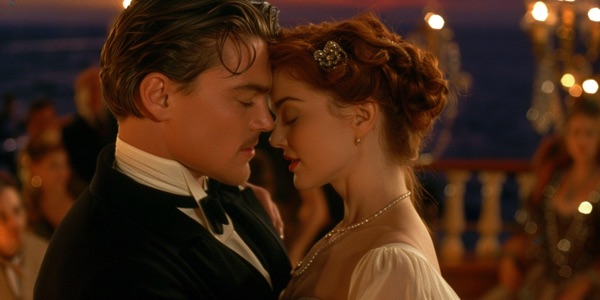
Jack and Rose, the main characters of Titanic, are completely fictional. Director James Cameron created them to give the audience an emotional story. By focusing on their love and struggles, Cameron was able to show the tragedy of the Titanic in a personal way. Rose's character was partly inspired by Beatrice Wood, an artist and writer from a wealthy family. Cameron read Wood's autobiography and found her story similar to the spirit he wanted Rose to have. Jack's character, however, was purely fictional. Interestingly, there was a real “J. Dawson” on the ship, but his name was Joseph Dawson, and he had no connection to the movie's story. He worked on the Titanic as a coal trimmer and was buried in Halifax, Canada, after the tragedy. Fans of the film often visit his grave, even though his story has no link to Jack.
5. How the Ship Sank
The movie accurately shows the Titanic splitting in two as it sinks. At first, people believed that the ship went down in one piece. However, when the wreck of the Titanic was discovered in 1985, it was clear that the ship had broken apart before sinking. This happened because of the pressure caused by water flooding one side of the ship. The other side rose into the air until the ship's weight caused it to snap between the second and third funnels. In the movie, this moment is recreated in a dramatic and realistic way. James Cameron worked with experts and studied the shipwreck to ensure the sinking was shown accurately. The calm before the collision, the chaos during the sinking, and the ship's break were all carefully researched, making the film's depiction very close to reality.
6. The Freezing Atlantic Water
In one of the film's most memorable scenes, Jack and Rose float in the icy Atlantic water after the Titanic sinks. The movie shows Jack staying in the water while Rose lies on a wooden door. In reality, the water temperature was about -2°C (28°F). At such low temperatures, most people would lose consciousness within 15-30 minutes due to hypothermia. Their bodies would quickly shut down, making survival almost impossible. James Cameron's attention to detail was so strong that he later tested this scene in a scientific experiment. He found that Jack and Rose could have both fit on the door, but their vital organs would still be in danger from the freezing water. The freezing water of the Atlantic was one of the deadliest factors of the tragedy, claiming hundreds of lives even for those who managed to escape the ship.
James Cameron's Titanic is a mix of historical accuracy and creative storytelling. While some details were changed or added for dramatic effect, many parts of the film reflect the real events of the Titanic disaster. The movie brings to life the heroism, tragedy, and human stories of one of history's greatest maritime tragedies, making it unforgettable for viewers around the world.
 Lingard
 Shrek: Fun Facts You Didn't Know
 Stranger Things: Surprising Facts About the Show
 Fun Facts About the Madagascar Movies
 Interesting Facts About the Venom Movies
 Fascinating Facts About the Ice Age Movies
 Back to the Future: Fascinating Facts You Didn't Know About the Trilogy
 Home Alone - Interesting Facts You Didn't Know About the Movies
 Sherlock - Interesting Facts You Didn't Know About the Series
 Green Book: What the Film Teaches Us
 The Devil Wears Prada: What the Film Teaches Us
 The Secrets of Oppenheimer: What the Film Really Tells Us
 The Secrets of Tenet: What the Film Really Tells Us